

 Tiếng Việt
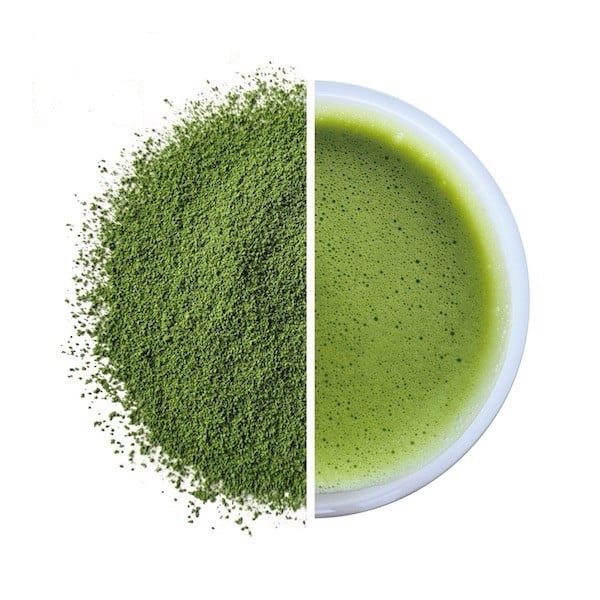
The global Fast-Moving Consumer Goods (FMCG) market has witnessed an unprecedented integration of matcha across mass-market product categories. What was once restricted to traditional tea ceremonies and artisanal cafes has evolved into a high-demand functional ingredient for industrial food and beverage processors worldwide. Today, green tea raw materials represent a core flavor driver in:
-
Ready-To-Drink (RTD) Beverages: Bottled green tea lattes in PET containers, aluminum-canned matcha energy drinks, shelf-stable RTD iced teas, and functional botanical waters.
-
Industrial Confectionery & Baked Goods: Mass-produced biscuits, wafer fillings, chocolate coatings, baked snacks, and packaged cakes.
-
Commercial Dairy & Frozen Desserts: Packaged ice cream bars, soft-serve premixes, shelf-stable yogurts, and flavored milk beverages.
-
Nutraceuticals & Powder Premixes: Plant-based protein blends, functional dietary supplements, instant sachet drinks, and meal replacement powders.
However, scaling matcha from a small-batch kitchen recipe to a high-speed, continuous industrial production line introduces complex chemical, mechanical, and economic hurdles that standard food-grade green tea powders cannot overcome:
-
Rapid Particle Sedimentation in RTD Bottling: In liquid beverage manufacturing, particle size distribution is paramount. Standard green tea powders contain coarse, non-uniform particles (above 40 microns) that settle rapidly out of suspension. On retail shelves, this results in an unappealing layer of dark sediment at the bottom of clear PET bottles, severely harming visual consumer appeal and brand perception.
-
Thermal Oxidation Under UHT & Retort Sterilization: Industrial beverage processing requires High-Temperature Short-Time (HTST), Ultra-High Temperature (UHT) processing ($120^circtext{C} – 140^circtext{C}$ / $250^circtext{F} – 285^circtext{F}$), or retort sterilization to ensure commercial shelf stability. Delicate tea polyphenols and chlorophyll molecules frequently degrade under this intense thermal stress. The result is a dramatic, undesirable color shift from vibrant green to muddy brown, accompanied by a burnt, “cooked” off-flavor (pasty off-notes) that ruins the product’s natural profile.
-
Powder Caking in Automated Dry-Dosing Hoppers: Mass production lines rely on high-speed automated volumetric hoppers and pneumatic powder feeders. Commercial green tea powders with inconsistent moisture content ($> 5.0%$) or poor bulk density tend to absorb atmospheric humidity, leading to powder agglomeration (caking). This causes frequent blockages in industrial dosing hoppers, resulting in costly line stoppages, recipe proportion errors, and downtime.
-
Raw Material Volatility & Squeezed FMCG Margins: For mass-market consumer products, raw material Cost of Goods Sold (COGS) dictates commercial viability. Sourcing imported industrial green tea powders through multi-tiered broker networks introduces severe price volatility and high logistical markups. When raw material costs fluctuate unpredictably or remain artificially high, food manufacturers struggle to protect their Gross Profit Margins across high-volume retail distribution channels.
At Matcha.com.vn, we eliminate these industrial bottlenecks directly at the primary agricultural and micronization source. Operating an integrated 50-hectare single-origin tea estate on the Mộc Châu Plateau (1,500m elevation) alongside a modern cleanroom micronization plant, we produce a specialized Industrial Matcha Grade specifically calibrated for automated processing lines.
By combining controlled shade cultivation, specialized flash-steaming (Fukamushi), and ultra-fine air-jet micronization (800–1200 Mesh / 10–15 microns), our industrial supply delivers superior liquid suspension, UHT thermal color retention, free-flowing hopper performance, and direct primary producer cost efficiency (35% to 50% raw material cost savings).
Engineered for Food & Beverage Manufacturing (Why Choose Our Industrial Grade?)
Unlike standard green tea powders produced for basic culinary use or manual beverage preparation, our Industrial Matcha Grade is an engineered raw material designed explicitly to satisfy the rigorous technical demands of high-speed, continuous food and beverage manufacturing.
1. Exceptional Thermal & UHT Resistance (120-140 oC)
Industrial food and beverage processing subjects raw materials to intense thermal sterilization—such as Ultra-High Temperature (UHT) flash heating, High-Temperature Short-Time (HTST) pasteurization, or retort cooking—to achieve commercial shelf stability.
-
Cellular Pigment Protection: Our leaves undergo immediate high-pressure flash-steaming (Fukamushi) at harvest. This process deactivates degradation enzymes (polyphenol oxidase) while locking the natural chlorophyll matrix into a heat-resistant state.
-
Color Stability in RTD Lines: Retains an attractive, natural leaf-green hue in bottled RTD drinks, canned lattes, and packaged dairy products after passing through UHT thermal cycles ($120^circtext{C} – 140^circtext{C}$ / $250^circtext{F} – 285^circtext{F}$).
-
Clean Aromatic Profile: Prevents the formation of unpleasant thermal oxidation byproducts, ensuring your final consumer product maintains a fresh, botanical green tea aroma without bitter or burnt off-notes.
2. Ultra-Fine Micronization (800–1200 Mesh) for Low Sedimentation
In liquid beverage manufacturing (liquid RTD teas, plant-based milks, bottled lattes), gravity-induced particle sedimentation is a primary cause of quality rejection.
-
Micro-Fine Particle Distribution: Milled to an ultra-fine 800–1200 mesh (10–15 microns) using high-precision air-jet pulverization systems, significantly smaller than conventional culinary powders.
-
Extended Liquid Suspension: Based on Stokes’ Law, reducing particle radius drastically slows settling velocity. Our micro-fine particles remain suspended far longer in liquid matrices, minimizing sedimentation in clear PET bottles and extending shelf-life visual quality.
-
Smooth Mouthfeel in Dairy & Ice Cream: Eliminates chalkiness and tongue grittiness in mass-produced ice cream mixes, yogurt, and confectionery fillings, ensuring a velvety sensory profile.
3. High Flowability & Anti-Caking for Automated Dosing Lines
Continuous food manufacturing relies on automated dry-dosing hoppers, pneumatic conveyors, and high-speed volumetric feeders.
-
Strict Moisture Control ($< 4.5%$):Dried using low-temperature vacuum systems to maintain an industry-leading moisture threshold below 4.5%, preventing moisture-induced agglomeration.
-
Consistent Bulk Density & Flowability:Engineered for uniform volumetric filling, ensuring smooth powder flow through high-speed automated packaging and mixing systems without caking or clumping.
-
Reduced Factory Downtime: Minimizes equipment blockages and cleaning maintenance stops, allowing your production lines to run continuously at maximum throughput capacity.
4. Factory-Direct Sourcing to Maximize FMCG Gross Margins
For mass-market FMCG products, managing Cost of Goods Sold (COGS) is vital to maintaining competitive retail pricing while safeguarding corporate profitability.
-
Elimination of Intermediary Markups:Sourcing directly from our integrated 50-hectare primary production estate in Mộc Châu delivers 35% to 50% cost savingscompared to traditional imported Japanese industrial suppliers.
-
Predictable Long-Term Pricing: Protect your product line’s financial forecasts against market swings with multi-year fixed price contracts supported by our scalable, self-owned agricultural capacity.
-
High Flavor Yield per Batch:Concentrated botanical strength means lower required inclusion rates ($0.5% – 2.0%$ by weight depending on application), driving down raw material cost per finished retail unit.
Technical Specifications & Industrial Regulatory Dossier
In mass-scale food and beverage manufacturing, standardized raw material parameters, strict batch-to-batch repeatability, and rigorous international regulatory compliance are non-negotiable prerequisites. Our Industrial Matcha Grade is manufactured within a modern cleanroom environment certified under ISO 22000:2018 and HACCP standards at our primary Mộc Châu facility.
Technical Parameter Matrix
| PARAMETER CATEGORY | TECHNICAL METRIC / SPECIFICATION | TESTING METHOD / STANDARD |
|---|---|---|
| Product Grade | Industrial / Food Manufacturing Grade Matcha | Internal Factory Grading |
| Botanical Source | 100% Camellia sinensis (Selected High-Yield Cultivars) | Botanical Identification |
| Geographic Origin | Mộc Châu Plateau, Sơn La Province, Vietnam (1,500m Elevation) | Geographical Traceability |
| Harvest Season | Summer / Autumn Flush (Shade-grown 10–12 days) | Crop Management Log |
| Processing Method | Steam-Deactivated (Fukamushi), Air-Separated Tencha, Air-Jet Micronized | Factory SOP |
| Particle Size / Fineness | 800 – 1200 Mesh (10 – 15 Microns) | Laser Diffraction Analysis |
| Color Metrics (CIELAB) | Bright Olive Green / Deep Leaf Green (L* > 50, a* < -8, b* > 16) | CIELAB Spectrophotometer |
| Moisture Content | < 4.5% (Low moisture prevents caking) | Loss on Drying (105°C, 3h) |
| Ash Content | < 7.0% | Gravimetric Method |
| Solubility / Dispersion | Ultra-Fine Liquid Dispersion (Low Sedimentation Rate) | Dispersion Velocity Test |
| Thermal Tolerance | Resistant to UHT Sterilization (120°C – 140°C) & Retort | Pilot Line Thermal Test |
| Recommended Dosage | 0.5% – 2.0% by weight of total formulation | Application Dependent |
| Shelf Life | 24 Months (Unopened in original vacuum-sealed packaging) | Accelerated Stability Test |
Microbiological & Chemical Safety Standards
-
Microbiological Benchmarks:
-
Total Plate Count (TPC): $< 10,000$ CFU/g (Low bioburden suitable for dairy & beverage processing)
-
Yeast & Mold: $< 100$ CFU/g | Coliforms: $< 10$ CFU/g
-
Escherichia coli, Salmonella spp., Staphylococcus aureus: Negative / 25g
-
-
Heavy Metals & Contaminants:
-
Lead (Pb): $< 2.0$ mg/kg | Arsenic (As): $< 1.0$ mg/kg
-
Cadmium (Cd): $< 0.2$ mg/kg | Mercury (Hg): $< 0.1$ mg/kg
-
-
Pesticide Residue & Radiation Compliance: Fully compliant with US EPA, EU Regulation (EC) No 396/2005, and Japan’s Positive List System. Verified Non-GMO, clean-label, and free from radiation.
Food Safety Certifications & Export Dossier
-
Facility Certifications: ISO 22000:2018, HACCP, FDA Facility Registration, and Halal Certification.
-
Export Documentation Package: Every container load includes a Lot-Specific Certificate of Analysis (COA), Technical Data Sheet (TDS), MSDS, Phytosanitary Certificate, and Certificate of Origin (Form E, Form EUR.1, or Standard C/O) for 0% or reduced preferential tariffs.
Bulk Industrial Packaging & Supply Chain Scalability
For high-volume FMCG manufacturers, raw material excellence must be matched by robust industrial packaging, scalable processing capacity, and absolute supply chain reliability.
1. Heavy-Duty Industrial Packaging Formats
10kg & 20kg Export Cartons (Double-Wall Corrugated): Packed inside heavy-gauge multi-layer aluminum vacuum pouches under inert nitrogen flushing. Outer cartons utilize double-wall corrugated fiberboard designed for high-density pallet stacking.
25kg Food-Grade Lined Fiber Drums:Purpose-built for large-scale processing plants utilizing pneumatic lifting cranes and automated hopper-dumping systems. Equipped with twin heavy-duty inner polyethylene liners and tamper-evident steel clamp rings.
2. Container-Load Capacity & Supply Security
Flexible FCL & LCL Freight Shipments:Capable of fulfilling Full Container Loads (20ft FCL: approx. 5–6 Metric Tons / 40ft FCL:approx. 12–14 Metric Tons) as well as Less-than-Container Loads (LCL).
Annual Supply Agreements (Fixed Pricing):Lock in long-term raw material costs with multi-year supply contracts, absorbing agricultural seasonal cost fluctuations.
Strategic Buffer Inventory: Dedicated safety buffer stock maintained in temperature-controlled warehouses near major export shipping hubs (Haiphong Port and Cát Lái Port).
3. Custom Milling & Industrial Specification Tailoring
Targeted Particle Size (Mesh Calibration):Ability to calibrate air-jet pulverizers from 800 Mesh to 1200 Mesh based on factory-specific fluid dynamics or dry-mixing needs.
Moisture & Flowability Optimization: Custom thermal drying parameters to achieve specialized moisture levels (< 3.5% to < 4.5%) for sensitive automated dry-dosing hoppers.
Industrial Pre-Blending Services: Cleanroom contract blending with functional carrier bases, natural anti-caking agents, or clean-label starches under ISO 22000 conditions.
Why Global Food Manufacturers Partner with Matcha.com.vn
Selecting a bulk green tea raw material supplier for mass FMCG manufacturing requires a primary manufacturing partner capable of delivering total supply chain security, strict physical-chemical repeatability, direct factory cost efficiency, and full international trade compliance.
1. Integrated 50-Hectare Single-Origin Estate (Total Supply Security)
We own and manage our entire 50-hectare agricultural estate on the high-altitude Mộc Châu Plateau. Complete agricultural management eliminates raw material shortages, providing 100% farm-to-factory traceability for corporate supplier audits and ESG compliance.
2. Strict Batch-to-Batch Technical Repeatability
Every commercial batch is verified using laboratory spectrophotometers to guarantee strict CIELAB color parameter alignment ($L^*$, $a^*$, $b^*$). Standardized air-jet pulverization maintains a constant 800–1200 Mesh particle curve and a moisture threshold below 4.5%, guaranteeing predictable flowability through automated dosing hoppers.
3. Bilateral Free Trade Agreements & Tariff Advantages (EVFTA & RCEP)
Operating out of Vietnam provides global food manufacturers and ingredient importers with exceptional tariff savings under major trade agreements:
-
EVFTA (European Union): Preferential 0% or reduced import tariff rates for European food manufacturers.
-
RCEP & CPTPP (Asia-Pacific / ASEAN): Expedited customs clearances and zero-tariff benefits across Southeast Asia, Japan, South Korea, and Australia.
4. Primary Producer Price Directness (Maximized COGS Margins)
By procuring directly from the primary manufacturer, you eliminate trading house markups, broker commissions, and redundant logistical stops—delivering 35% to 50% raw material cost savingscompared to imported Japanese industrial grades.